1 October 2026
Buying a Used Coffee Grinder: What's Worn, What's Fixable, and What's Worth the Money
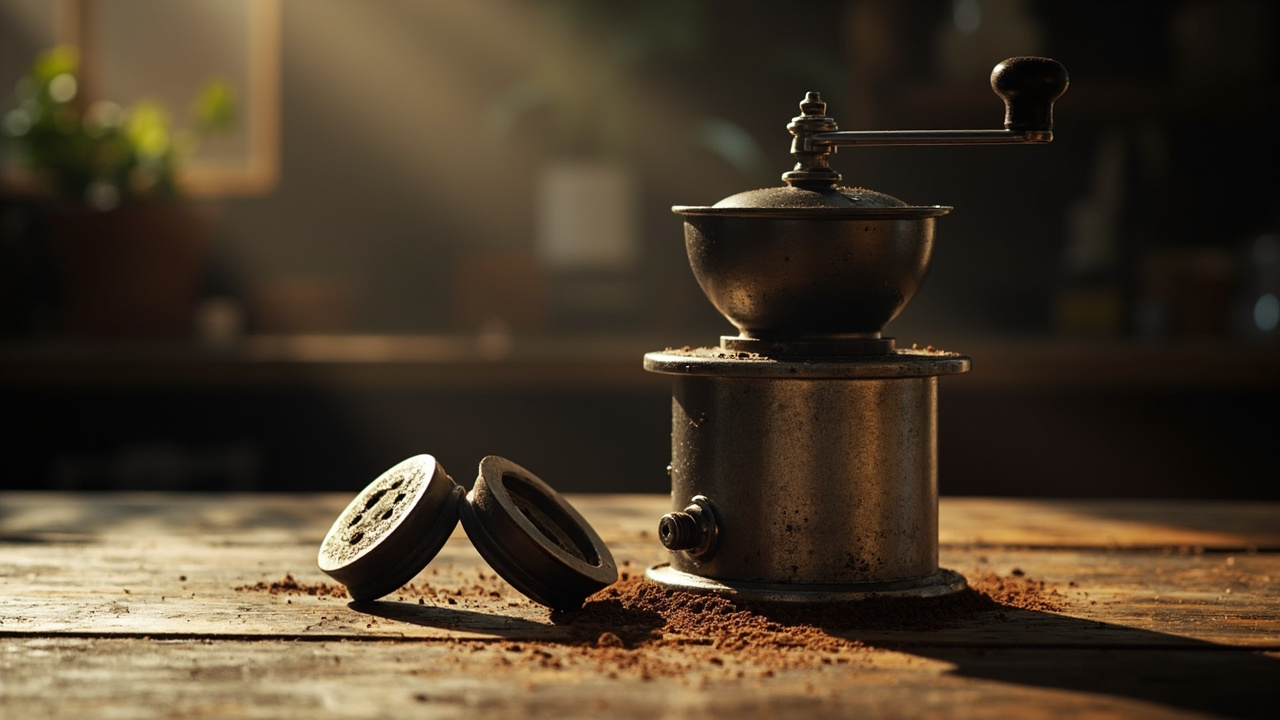
A used grinder is only a bargain if the parts that wear are still good or cheaply replaced. So the question when buying a used coffee grinder isn't really the listing price — it's what you'd actually be inheriting, and what it would cost to put right. Burrs dull, bearings loosen, motors age, and casings crack, but the price tags for those fixes are wildly different across the second-hand market. This guide walks through the parts that actually wear, what a sensible inspection looks like, what a replacement burr set costs on the machines people usually see on the used market, which models are worth refurbishing, and how the seller's support can change the arithmetic entirely.
Table of contents
- Key takeaways
- Is this used grinder actually worth buying?
- Which parts on a grinder actually wear out?
- How do you check those parts before you pay?
- What does a replacement burr set actually cost on these models?
- Which used grinder models are worth refurbishing — and which aren't?
- How does the seller's support change the answer?
- Sources
Key takeaways
- A grinder's value on the second-hand market is driven almost entirely by the state of its burrs, bearings, motor, and electronics — not the listing photos.
- Replacement burr sets are the single biggest variable cost in a refurb, ranging from roughly €20 on a basic hand grinder to several hundred euros on prosumer electric models.
- Conical-burr machines and small flat-burr grinders tend to refurbish well; mid-range blade-style or entry-level plastic electrics usually do not.
- An in-house workshop and stocked spares shift the "is this worth it?" calculation more than the asking price does.
- Always run a grinder empty for thirty seconds and weigh a test dose before paying; noise profile, grind consistency and static are the three tells that matter most.
Is this used grinder actually worth buying?
A used grinder is worth buying when the parts that wear are still serviceable, when spares for the model are still in production, and when the price reflects the cost of those parts plus a realistic refurb fee. If any one of those three is missing, the "bargain" quietly becomes a parts donor. The honest way to judge a second-hand grinder is to subtract the realistic cost of putting it right from the price, then ask whether the remainder is competitive with a new unit of the same capability. The same logic applies to anyone who is serious about buying a used coffee grinder: the listing is the start, not the answer.
Three numbers tell the story. First, the price of a replacement burr set for the model. Second, the cost of any bearing or motor work it actually needs. Third, the price of a comparable new grinder. If the first two combined eat most of the second, walk away.
The shop's Grinders, brewers, filters and spares page is a useful reality check here: prices are listed VAT-inclusive and stocked models are described in plain terms, which makes it easier to anchor a second-hand price against a current new one. If the used price is barely below a new unit of the same generation, the refurb arithmetic rarely works.
Which parts on a grinder actually wear out?
 Four part families account for nearly every grinder failure: burrs, bearings, the motor, and the electronics or drive coupling. Casings and hoppers can chip or crack but don't usually change how the machine performs. Knowing which is which is what separates a careful buyer from someone who ends up with an expensive paperweight.
Burrs and cutting surfaces
Burrs are the heart of the grinder. Steel conical or flat burrs dull gradually with use — for home users, the dulling is slow enough that many people never replace them. For a second-hand unit, the question is how many kilos of coffee have already passed through. You can't see wear by eye, but you can feel it: shots run faster than they should at the same setting, particle distribution gets wider, and the grinder struggles to produce the fine end of its range. On a typical prosumer electric, a steel burr set is rated for somewhere between 500 and 1,500 kg of coffee before it needs replacing, depending on the manufacturer and how dark the roasts are.
Bearings and shaft assembly
Bearings are the part most people don't think about until they fail. A worn bearing sounds like a rattle, a hum that changes pitch, or a wobble you can feel on the drive shaft. On hand grinders, the bearing is usually a small brass bushing; on electric grinders, it's a sealed cartridge bearing on the drive shaft. Bearings don't always need replacing — sometimes they just need cleaning and re-greasing — but on a used machine this is the most common reason a "perfect" listing is actually a problem. The fix can be as small as a strip-down and a dab of food-grade grease, or as large as a replacement cartridge plus a half-hour of bench time, which is why bearing condition deserves a proper listen rather than a guess.
Motor brushes and electronics
Older DC-motor grinders have carbon brushes that wear. The tell is intermittent power, sparking at the motor housing, or a sudden refusal to start. Brushes are usually a cheap part but they're a service item, not a user item, so on a used grinder the work matters. Electronics — RPM sensors, timers, displays, control boards — are usually fine until they aren't, and a dead board on a discontinued model can write the machine off entirely. On a used listing, ask whether the seller has run the grinder on its full speed range, not just a short burst, because brush and board faults often only show up after a minute or two under load.
Casing, hopper, drive coupling
Plastic hoppers and casings can crack, paint can flake, and the drive coupling between motor and burr carrier can wear or slip. None of these usually affect grind quality, but a slipped coupling will reduce effective burr speed and produce a coarser grind than the setting suggests. A visible crack in the burr carrier is the only casing issue that should kill the deal on its own. Surface scuffs on a plastic shell are cosmetic; a crack that runs across a load-bearing rib is structural, and the hopper, chute and grounds container are the three places to look first because they take the most handling.
How do you check those parts before you pay?
Run the grinder empty for thirty seconds, weigh a test dose before and after, and listen to it under load. Those three checks catch the overwhelming majority of issues a used grinder can have, and they take about ten minutes. Bring a small bag of beans, your phone for a slow-motion video, and a set of scales accurate to 0.1 g if you have one. Do the empty run first, the loaded run second, and the inspection third; in that order, each step rules out a different family of faults before you move on.
What to listen for under load
A healthy grinder has a steady, even sound at its working RPM. Rattling, clicking, or a tone that wavers under load are all bad signs. Rattling usually points to a loose burr carrier or worn bearing; clicking to a chipped burr or a foreign object; a wavering tone to motor brush wear or a slipping drive coupling. A video with audio is more useful than a live listen in a quiet shop, because you can play it back and compare it to reference sounds for the same model. Record the empty run and the loaded run back-to-back; a fault that only appears once beans start pulling through the burrs is one that an empty test would have missed.
How to read the grind itself
Pull a 10 g dose through the grinder and weigh what comes out. Anything under 9.6 g on a 10 g dose is retention from a clogged chute or static; anything over 10.4 g means the burr carrier is loose. Pull a second dose the same way and compare particle size by eye on a white surface: a wide spread with fines at one end and boulders at the other means dull or chipped burrs. A consistent, even grind that you can repeat means the burrs and drive are doing their job. If you have a sieve, shake a 30 g sample through it and weigh what passes; a healthy grind sits in a tight band, and a tired burr set spreads the distribution wider than the setting suggests.
What to inspect by hand
Unplug the grinder and tip the hopper. Look for the burr type stamped on the carrier, the manufacturer part number, and the production date if it's printed. Spin the burr carrier by hand on an electric model — it should turn freely with no resistance and no play. On a hand grinder, take the handle off and check the shaft for wobble. Run a finger around the inside of the hopper for hairline cracks, and check that the grind setting collar turns smoothly through its full range without slipping. Confirm that the collar returns to the same setting when you rotate it a full turn and back; a slipping collar is a worn detent or a stretched spring, and either one is a small part and a short service rather than a deal-breaker.
What does a replacement burr set actually cost on these models?
This is the number that decides most used-grinder deals. A few outliers — large commercial flat-burr sets, ceramic replacements, or branded "competition" burrs — go higher than that, and a discontinued model with no current burr supply is effectively a parts donor regardless of what the seller is asking. The cost of the burr set alone can swing a used buy from a clear saving to a break-even, which is why it's worth pinning down before you commit.
For the conical-burr hand grinders in the Grinders, brewers, filters and spares range (€69–€189 new), burr sets are in the €20–€35 bracket and are usually stocked alongside the machine. For the electric grinders in the same range (€249–€620 new), replacement burr sets are part of the spares the workshop stocks, and the team can confirm availability and current pricing for a specific model by email. The filters and spares section, which lists "burr sets" starting from €4 for consumables and small parts, is also worth scanning for the small items — gaskets, baskets, springs — that often need to be replaced on a second-hand unit at the same time as the burrs.
The arithmetic that matters is: burr set cost + estimated bearing or motor work < the difference between the used price and the new price of the same machine. If it isn't, the bargain isn't one.
Which used grinder models are worth refurbishing — and which aren't?
A used grinder is worth refurbishing when the burr set is still available, when the bearings and motor are within serviceable condition, and when the new price of an equivalent machine is meaningfully higher than the used price plus refurb cost. Small flat-burr electrics and conical-burr hand grinders usually refurbish well. Mid-range blade-style or entry-level plastic electrics almost never do, because the replacement parts are often more expensive than a brand-new unit of the same class. The cheapest way to think about a used buy is as "new price minus refurb cost": if that sum is below a sensible new price for the same capability, the deal is real; if it isn't, the listing is just a discount on a parts donor.
Models that usually refurbish well
Steel conical-burr hand grinders from established makers refurbish reliably: parts are small, burrs are cheap, and the work is mostly cleaning and re-greasing the bearing. The same is true of prosumer flat-burr electrics from brands that have been in the market for a decade or more — the parts ecosystem is mature, the bearings are serviceable, and the new price of an equivalent model is high enough that the refurb math works. A well-kept used example of a current-generation prosumer grinder, at roughly half the new price, is usually the strongest used buy on the market.
Models that usually don't
Blade-style "grinders" aren't really grinders at all and don't hold their value, new or used. Entry-level electric grinders with plastic burr carriers and proprietary control boards are also poor used buys: replacement parts are scarce, the burrs tend to be under-sized for the motor, and the new price of a competent unit is low enough that there's no bargain to find. Discontinued models from brands that have left the European market are the third category to avoid — the support is gone even if the parts technically still exist. In all three cases, the used price rarely falls far enough below the new price to absorb a full refurb, and the listing is usually better ignored.
How does the seller's support change the answer?
A grinder that comes with a known support path — a stocked parts list, a workshop that services what it sells, and a person who answers email — is worth more than an identical unit from a stranger with a photo. The reason is simple: most grinder problems are small, and most of them can be fixed in an hour with a part that's already on the shelf. Without that support, the same problems either don't get fixed or get fixed expensively. For a used buyer, the support path is the difference between a one-hour fix and a machine that lives in a drawer.
A 30-day change-of-mind window, a two-year warranty on parts and labour, and a Delivery times and what shipping costs cut-off at 14:00 on working days are the practical signals that the seller is set up to back what they sell, rather than just move boxes. The same logic applies to repair turnarounds: a workshop that turns a repair around in five to ten working days is a very different proposition from one that ships the machine to a distributor and quotes a six-week ETA. For a used buyer, that distinction usually matters more than the asking price, because the typical second-hand unit will need at least one service in its first year of new ownership.
For a buyer who doesn't want to take the second-hand gamble at all, an alternative is to buy a new entry-level grinder from a seller whose workshop backs the warranty and stocks the consumables — the shop lists hand grinders from €69, electric grinders from €249, and the filters, baskets, gaskets and burr sets that go with them, all VAT-inclusive with the same shipping cut-off. For a buyer who is set on a used machine, the same seller is also the most useful place to price the new equivalent and to confirm that the burr set for the model they're considering is still in stock before they commit.
One more check before paying: a used grinder that the seller can identify by serial number, describe what spares it takes, and back with a return window is a very different proposition from one that's "tested working" with no further information. If the listing is silent on serial number, on which burr set it uses, and on what the seller will do if the machine fails in the first month, treat that silence as information. Either ask directly, or budget for the worst case in the price you're willing to pay — and if you're not sure which one applies, write to the Contact the shop page and a real person usually answers the same day.
Sources
- Specialty Coffee Association — Coffee Grinder Standards
- European Coffee Federation — Grinding Equipment Guidance
- Directive (EU) 2019/771 on certain aspects concerning contracts for the sale of goods — EUR-Lex
- Directive 2011/83/EU on consumer rights — EUR-Lex
- International Organization for Standardization — ISO 4053:2022 Coffee and coffee products