26 October 2026
Best Coffee Grinder for Small Amounts
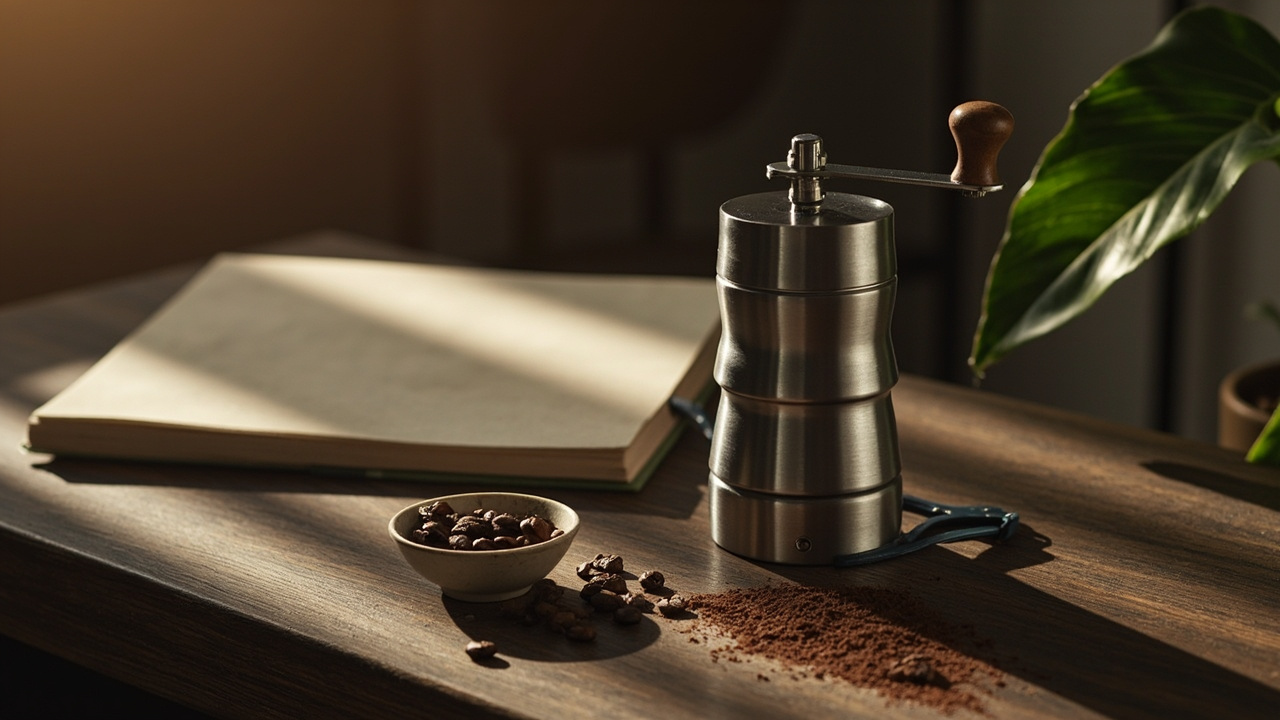
Grinding only one small batch can leave stale beans trapped inside the grinder—or grounds scattered across the counter. The best coffee grinder for small amounts therefore needs accurate dose control, low retention, easy cleaning, and burrs suited to the coffee you drink. Here is how to compare the options without paying for capacity you will never use.
Table of contents
- Key takeaways
- What makes a coffee grinder good for small amounts?
- Which grinder type suits a single-cup brew?
- How much coffee should a small-batch grinder keep in its chamber?
- Which grinder should you buy for small amounts?
- How do you prevent bean waste when grinding only one cup?
- Sources
Key takeaways
- A manual or compact electric grinder can be well suited to one cup, provided its adjustment range and dose control remain accurate at small weights.
- Low retention matters more than hopper size: ground coffee trapped after grinding is both wasted and harder to keep fresh.
- Burrs generally provide more consistent particle sizes than blades, especially when brewing espresso.
- For a 15-gram dose, use a scale, grind into a container, and empty remaining grounds rather than repeatedly redosing the same grinder.
- The right choice depends on whether you value speed, control, compactness, or minimal coffee waste.
What makes the best coffee grinder for small amounts?
A good coffee grinder for small amounts controls the dose accurately, releases little retained coffee, and remains easy to clean after a single small brew. Capacity matters less than repeatability: the grinder should produce a similar result each time you use only 15–20 grams of beans.
Start with these practical criteria:
- Dose control: A timer, built-in scale, or reliable adjustment system should help prevent oversizing a small batch.
- Low retention: Few grounds should remain in the burrs, chamber, and chute after grinding.
- Consistent particle size: Burrs produce more uniform coffee than blades, particularly for espresso.
- Easy access: You should be able to reach the chamber and sweep out residual grounds without dismantling a complicated machine.
- Useful adjustment range: If you make several brew methods, the grinder must handle fine espresso through coarser filter coffee.
- Noise and footprint: These may influence the choice when you brew one cup in a small kitchen.
Retention deserves particular attention. Research published by the Coffee Quality Institute distinguishes retention—coffee remaining in the grinder—from the grounds that enter the brew basket. A grinder can produce an excellent dose while still leaving grounds behind, reducing the usable coffee from your bag and affecting the freshness of the next brew.
The practical question is not simply whether a machine has low retention. It is how much coffee remains relative to the smallest dose you normally brew. A grinder that retains 2 grams is insignificant during a large batch but substantial when the recipe calls for 15 grams.
Which grinder type suits a single-cup brew?
 A coffee grinder for a single cup should be easy to control, compact, and capable of producing an even grind without leaving a significant amount of coffee behind. Manual grinders, compact electric burr grinders, and blade grinders each serve this use differently.
Is a manual grinder best for one cup at a time?
A manual grinder is often the simplest choice for a single-cup brew because it has no motor, no electronic timer, and little internal space for unused grounds to accumulate. The user controls the dose by stopping when the desired weight is reached.
This route works especially well when:
- You prepare one or two cups at a time.
- Speed is not the main priority.
- You want a small countertop footprint.
- You enjoy setting the grind yourself and the manual mechanism is appropriate for your strength preference.
The trade-off is effort. Espresso requires especially fine and consistent grinding, so a manual grinder intended mainly for filter coffee may need more patience to reach that result.
Can a single-dose grinder reduce waste?
A single-dose coffee grinder can reduce waste because it grinds only the amount loaded into the chamber. If you use a 15-gram coffee dose, this format avoids carrying unused beans around inside a larger hopper and makes the prepared quantity easy to manage.
The important qualification is that “single dose” describes the loading format, not guaranteed low retention. A poorly designed single-dose chamber may still trap several grams of coffee. Check whether grounds can reach the chute and whether the burr area can be brushed clean.
Are blade grinders suitable for small amounts?
A blade grinder is inexpensive and compact, but it is not the strongest choice when consistency matters. Blades tend to produce a mixture of fine dust and coarse fragments, especially when the batch is small because the material may not circulate evenly.
For a light filter brew, a blade grinder can be adequate for experimentation. For espresso, a burr grinder is the more sensible option. For French press or immersion brewing, where particle-size variation is less damaging, a blade grinder may still work.
What about compact electric burr grinders?
A compact electric burr grinder combines repeatable motor-driven grinding with the control needed for small batches. Look for a fine adjustment mechanism, a narrow dose range, and a grounds container that can be emptied without losing material trapped elsewhere.
The motor itself does not guarantee accuracy. A timer that only offers coarse increments can be poorly matched to a 15-gram recipe, particularly when the dose changes by one or two grams.
How should you choose between these grinder types?
Choose a manual grinder when low retention, compactness, and control matter most. Choose a single-dose electric grinder when speed and convenience matter but you still want a small dose. Choose a blade grinder only when cost and simplicity outweigh grind consistency.
Among the current hand grinders and electric grinders, the practical comparison also comes down to how much equipment you want to maintain. The coffee equipment selection includes hand grinders, three electric models, scales, filters, and replacement parts, allowing the grinder and dosing setup to be considered together.
How much coffee should a small-batch grinder keep in its chamber?
A small-batch grinder should normally contain only the coffee you intend to grind, ideally no more than your usual dose plus a small allowance for error. For many filter methods, that means loading 15–20 grams rather than filling the chamber or hopper.
Is 15 grams enough for a single cup?
Fifteen grams of coffee is a common starting point for a generous single-cup filter brew, but the correct amount depends on the coffee, strength, and brew method. A larger cup, a lighter-roasted coffee, or a stronger recipe may require more.
For the best grinder for 15 grams of coffee, test the entire workflow rather than judging only the grounds that land in the cup:
- Weigh the beans before loading them.
- Grind to the target weight with a scale.
- Compare the dose with the brewer’s recipe.
- Adjust the grinder one small step at a time.
- Record the grinder setting and dose that produce the preferred extraction.
A scale with a timer can make this process much easier. The available scales are accurate to one-tenth of a gram, which is sufficient to compare small dose changes and identify an over-grind quickly.
Does a larger hopper create extra waste?
Not by itself. A larger hopper does not force you to grind more beans, but it makes it easier to lose track of older coffee or leave a substantial amount in the grinder. The relevant issue is how much coffee remains in the grinder after use.
Grinding only what you need is the safest starting point. If you use a hopper grinder, keep the amount inside it modest and transfer unused beans back to an airtight container. Do not leave them in the hopper for days, because oxygen and moisture can reduce their quality.
Should you leave beans in the chamber between uses?
No. For a low-retention coffee grinder setup, emptying the chamber after each brew prevents stale coffee from mixing with the next dose. It also makes it easier to notice whether the grinder is leaving an unusually large amount behind.
If a model cannot be emptied easily, a dry brush may help remove loose grounds from accessible surfaces. Follow the manufacturer’s cleaning instructions and never insert tools into a powered mechanism.
Which grinder should you buy for small amounts?
The best grinder for small amounts is a burr model with accurate fine adjustment, minimal internal volume, and easy access to retained grounds. The right choice depends on how often you brew and whether espresso is part of your routine.
For most single-cup filter drinkers, a manual burr grinder offers the best balance of control and low capacity. For espresso, a compact electric burr grinder is usually more practical because it reduces the effort required for fine grinding.
Best for a manual single-cup workflow
Look for a hand grinder with steel burrs, a stable adjustment mechanism, and a chamber that empties cleanly. The current selection includes two hand grinders, described as suitable for espresso when the user has the patience required.
A manual model is not ideal for everyone. It is better suited to someone who brews infrequently, wants minimal countertop equipment, and does not mind adjusting the grind by hand.
Best for electric convenience
Choose an electric burr grinder when you want speed, repeatable doses, and enough adjustment control for more demanding recipes. The available electric range spans three models, from an entry-level flat-burr option to a higher-priced model intended to last longer.
Avoid judging by motor power alone. Ask instead:
- Can it make small changes to grind size?
- Can it grind 15 grams without a large surplus?
- Are the grounds path and chamber accessible for cleaning?
- Is the dose control fine enough for your usual recipe?
Best for espresso
Espresso raises the consistency requirement because fines can impede flow and uneven particles can produce an unbalanced extraction. Burrs are the minimum sensible starting point, while adjustment range and repeatability matter more than hopper capacity.
A single-dose format is useful because it prevents you from preparing more coffee than needed. However, a good espresso grinder with a modest hopper can also work well. The deciding factors are fine adjustment, low retention, stable performance, and cleaning access.
Best for the lowest coffee waste
The lowest-waste setup combines a small working dose with an easy-to-empty chamber and a separate dosing container. Grind directly into the container, then remove the grinder from the scale if the brewer needs to sit on it.
Northbrew is a small Tallinn specialty coffee shop whose grinder and brewing equipment range includes hand and electric grinders, scales, filters, and replacement parts. It is not aimed at buyers who need pod machines, capsules, or bean-to-cup appliances, and its workshop handles spares and repairs.
What should you avoid when buying for small doses?
Avoid a grinder whose adjustment jumps too far between settings, whose grounds chamber is difficult to sweep clean, or whose timer cannot be stopped at a useful dose for a single cup. Be cautious with very cheap blade models, especially for espresso.
Also consider whether replacement parts are available. Burrs, gaskets, and filters are consumables rather than warranty items, so a grinder that uses replaceable wear parts may be easier to maintain over time.
How do you prevent bean waste when grinding only one cup?
Prevent bean waste by weighing each dose, grinding only what the recipe needs, and removing residual grounds from the grinder after brewing. Consistent weighing also improves extraction because the coffee-to-water ratio remains predictable.
Use a scale instead of estimating by eye
Pour beans onto the scale, tare it, and grind until you reach the target weight. If the grinder does not stop precisely at 15 grams, stop it, remove extra grounds, and return them to the bean container only if they are clean and unused.
A scale with a timer is particularly useful because the dose and brew timing can be handled together. For espresso, place the portafilter on the scale and grind to the dose directly; for filter brewing, weigh the beans before loading the grinder.
Grind into a dedicated container
Grinding directly into a cup or small container reduces handling and makes stray grounds easier to collect. Avoid grinding into a large hopper-style catch basin when you are preparing only one dose, because the unused ground coffee may remain in the container rather than returning to your next brew.
Clean the chute and chamber regularly
After every brew, tip the grinder and brush away loose grounds from accessible surfaces. Do this over a bin or tray so you do not scatter coffee across the counter. Follow the manufacturer’s instructions for removing burrs or opening mechanisms.
A compact cleaning routine also helps you identify unusual retention. If the same grinder consistently leaves significantly more coffee behind, adjust your loading and cleaning process or consider a design with better access.
Keep unused beans away from moisture and air
Store unused beans in an airtight container rather than leaving them in the grinder chamber. Keep the container cool and dry, and avoid repeatedly opening it during the day. For very small quantities, transfer the beans you plan to use into a smaller container so older coffee is not accidentally combined with the next batch.
Record the recipe before changing the grinder
Write down the dose, grind setting, coffee amount, water amount, and brewing time. When you make the next brew, change only one variable. This makes it easier to distinguish a grind problem from a ratio, temperature, or technique issue.
If you are comparing several grinders, run the same recipe through each one. Record the actual dose, taste, extraction symptoms, and the amount left behind. The winner is not necessarily the largest or most expensive model; it is the one that gives you the result you want with the least wasted coffee.